How Accurate Is AI Virtual Try-On for Clothes?
Learn how accurate AI virtual try-on is for clothes, what it can preview reliably, where it can fail, and how to judge outfit results before buying.
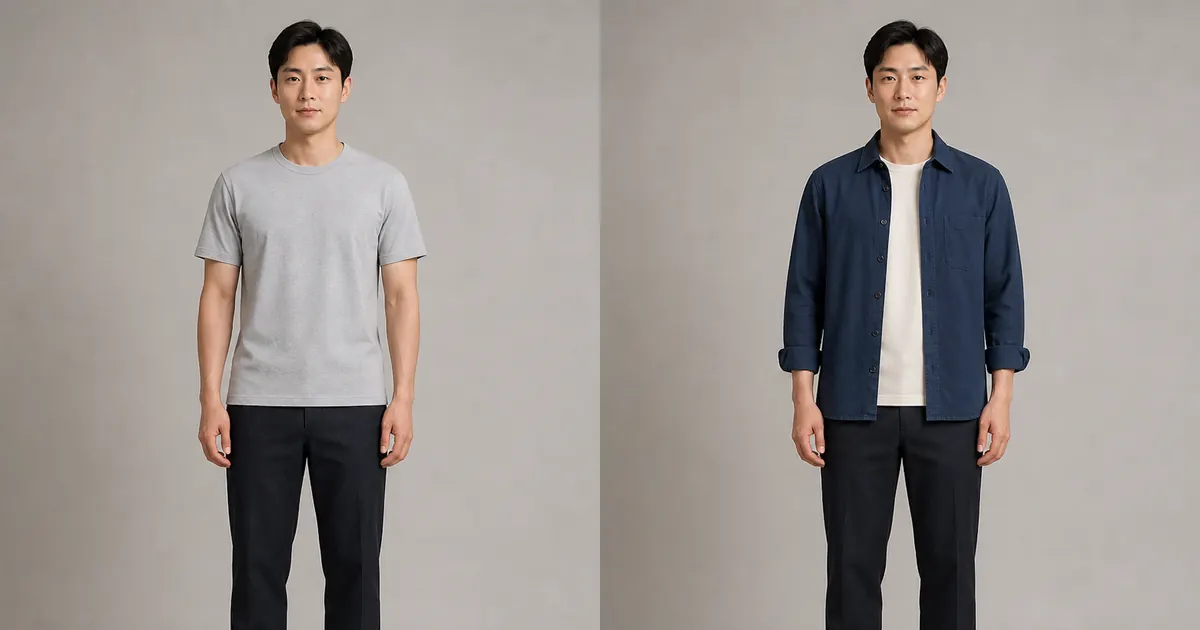
AI virtual try-on can be accurate enough to answer a practical styling question: does this color, neckline, layer, length, or overall silhouette look worth considering on me? A strong result keeps your face, body proportions, pose, hands, and background recognizable while changing the clothing convincingly. It is a visual preview, however, rather than a promise of physical fit.
The most useful approach is to separate appearance from measurement. Use an AI clothing try-on to compare outfits on the same photo, then use the retailer's size chart, garment dimensions, fabric information, reviews, and return policy to decide what to order. Asking the tool to do both jobs creates unrealistic expectations.
What a realistic virtual try-on can show
A good preview can help you compare visible styling features: color near your face, neckline, collar scale, sleeve length, layering, waist placement, hem position, trouser shape, and level of formality. It is especially helpful when choosing between several products that look similar on retailer models but create different visual proportions on your own photo.
Original AI clothes try-on accuracy examples
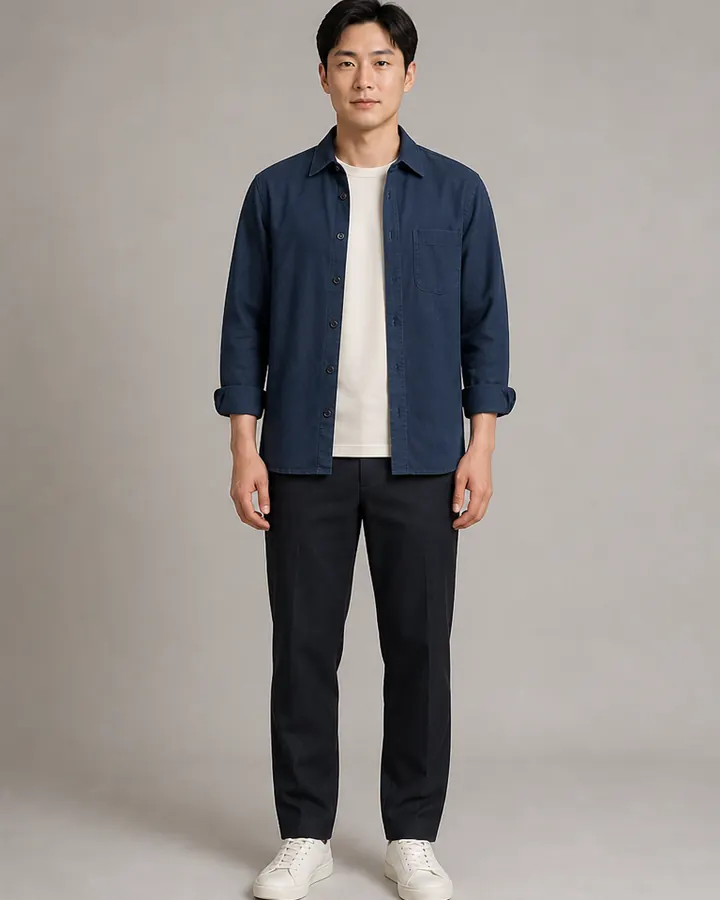
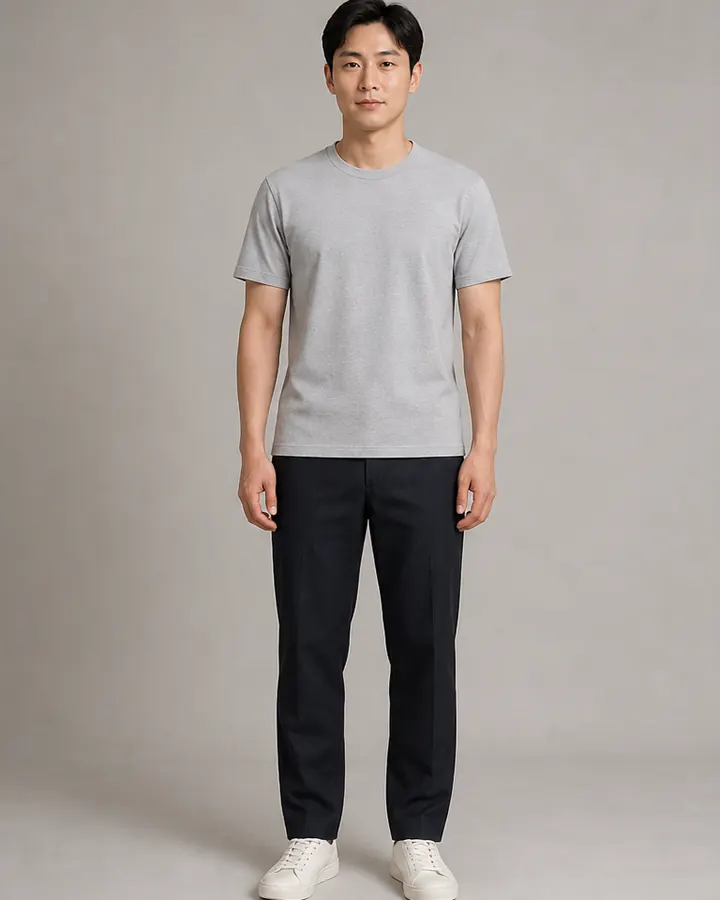
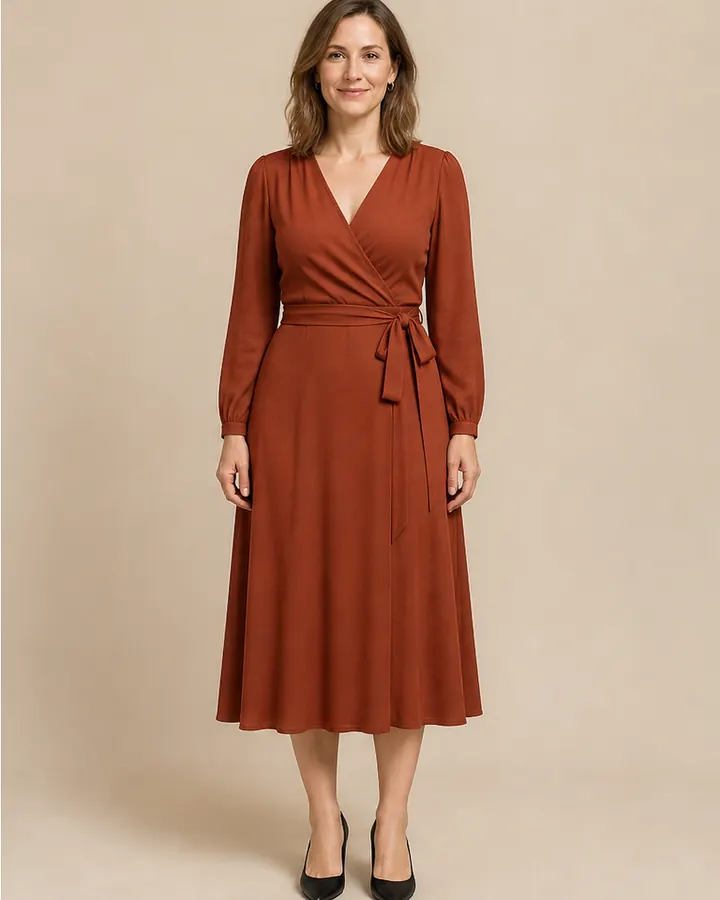
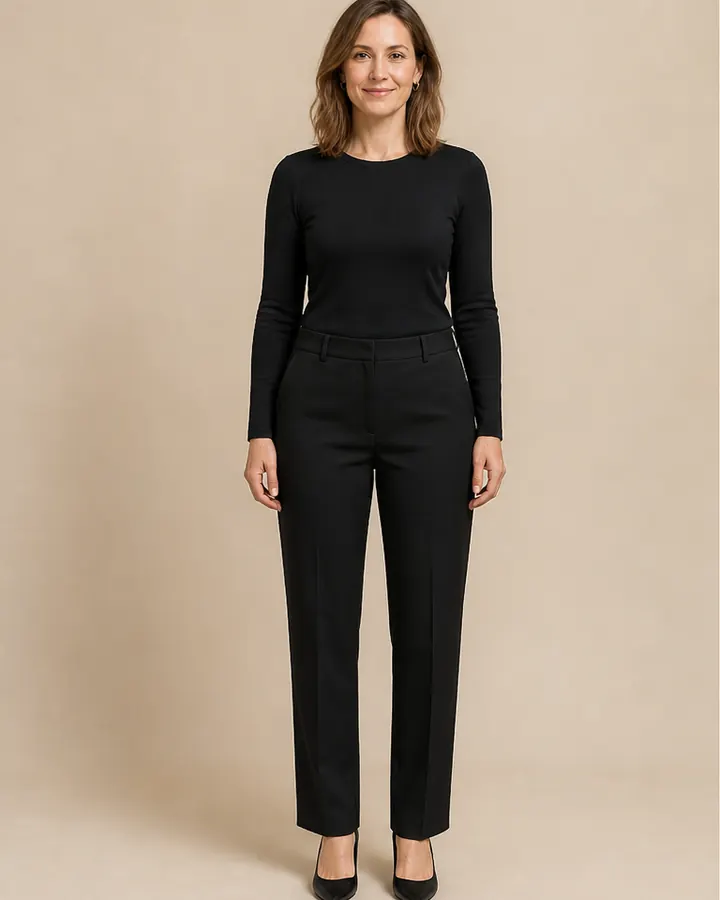
These new fictional-model comparisons were created for this guide. Within each pair, inspect whether the identity, expression, hairstyle, body outline, stance, camera position, and studio lighting remain stable. Then evaluate the generated collar, sleeves, waist, hem, seams, folds, and garment edges.
The first example adds a navy overshirt while retaining the trousers and shoes. The second replaces black separates with a rust wrap dress, making the neckline, waist tie, drape, and hem important accuracy checks.
 BeforeAfter
Men's outfit accuracy · Navy overshirt layering
 BeforeAfter
Women's outfit accuracy · Rust wrap midi dress
Use this five-point accuracy check
- Identity: confirm that your face, hair, expression, height, and natural body proportions have not changed.
- Garment structure: inspect the neckline, collar, shoulders, sleeves, fastenings, waist, pockets, and hem.
- Edges and anatomy: look closely where fabric meets hair, hands, arms, legs, shoes, and the background.
- Color and material: check for believable shading and folds without assuming the screen shows the exact real-world color or texture.
- Consistency: regenerate or reject any result with duplicated details, melted fingers, invented logos, broken patterns, or a different pose.
What AI virtual try-on cannot tell you
An AI fitting room cannot feel tightness, softness, weight, stretch, breathability, lining, transparency, or freedom of movement. It does not know whether a shoulder seam sits correctly, a zipper pulls, trousers fit at the waist, shoes pinch, or a fabric becomes uncomfortable after several hours. A visually convincing dress can still be the wrong physical size.
It may also approximate rather than reproduce small product details. Fine typography, logos, embroidery, lace, sequins, plaid alignment, sheer layers, reflective materials, unusual cutouts, and hidden construction are more difficult than a clearly photographed solid-color shirt. Always return to the original product page for close-up evidence.
Your two input photos affect the result
For your personal photo, stand front-facing in even light with your arms slightly away from your torso. Keep your shoulders, waist, legs, and shoes visible when they matter to the garment. Avoid crossed arms, bags, bulky outerwear, group shots, strong perspective, deep shadows, and heavy filters. For the clothing reference, show the complete garment from a compatible angle without menus, prices, text, or another item covering it.
Why two generations can produce different results
AI generation includes variation, so repeating the same outfit may change folds, edges, small details, or even the apparent garment length. One attractive result is not enough to establish reliability. Generate the important option more than once and look for features that remain consistent across credible versions. If the collar, sleeve, waist, hem, or print changes substantially each time, treat that detail as uncertain. Consistency is more useful than choosing the most flattering single image, especially when you are trying to evaluate a specific product rather than explore a general style idea.
Run a fair three-outfit test
- Keep one clear personal photo unchanged for the entire comparison.
- Test one familiar outfit, one different silhouette, and one bolder option.
- Discard generations that change your identity, pose, or proportions.
- Compare only believable results and write down the visual features you prefer.
- Verify measurements, fabric, construction, availability, and returns before checkout.
Use any Try button on this page to open InFashi's AI clothes tool, or download the Android app from the action panel to test references on your phone. Treat each result as evidence for a shortlist—not proof of exact size or fit—and virtual try-on becomes a more honest and useful part of online shopping.
Frequently Asked Questions
- How accurate is AI virtual try-on for clothes?
- AI virtual try-on can provide a useful visual comparison of color, neckline, sleeve shape, layering, silhouette, and overall styling. It cannot guarantee physical size, comfort, fabric feel, movement, construction, or the exact fit of the product you receive.
- Does virtual try-on show the correct clothing size?
- No. A generated outfit image is not a body scan or sizing calculation. Check your measurements against the retailer's current size chart, garment dimensions, fabric stretch, model information, reviews, and return policy.
- What makes an AI clothes try-on look realistic?
- A sharp front-facing personal photo, a clean garment reference, similar camera angles, visible body boundaries, and simple lighting improve the comparison. A credible result should preserve your identity, pose, proportions, hands, and background.
- Which clothing details are hardest for AI to reproduce?
- Tiny logos, text, complex prints, lace, sequins, sheer panels, reflective fabric, unusual cutouts, hidden fastenings, and garments shown at an incompatible angle may be simplified, moved, or invented.
- Can I use virtual try-on before buying clothes online?
- Yes. Use it to compare visual direction and create a shortlist, then return to the retailer to verify the real product's measurements, materials, photographs, delivery details, and return terms before buying.
Try it on InFashi
Upload a photo in your browser, or download the Android app and preview your look on your phone.