What Clothes Suit My Body Shape? An AI Outfit Try-On Guide
Learn how to choose clothes for your body proportions, compare silhouettes for women and men, and preview outfits on your own photo with AI.
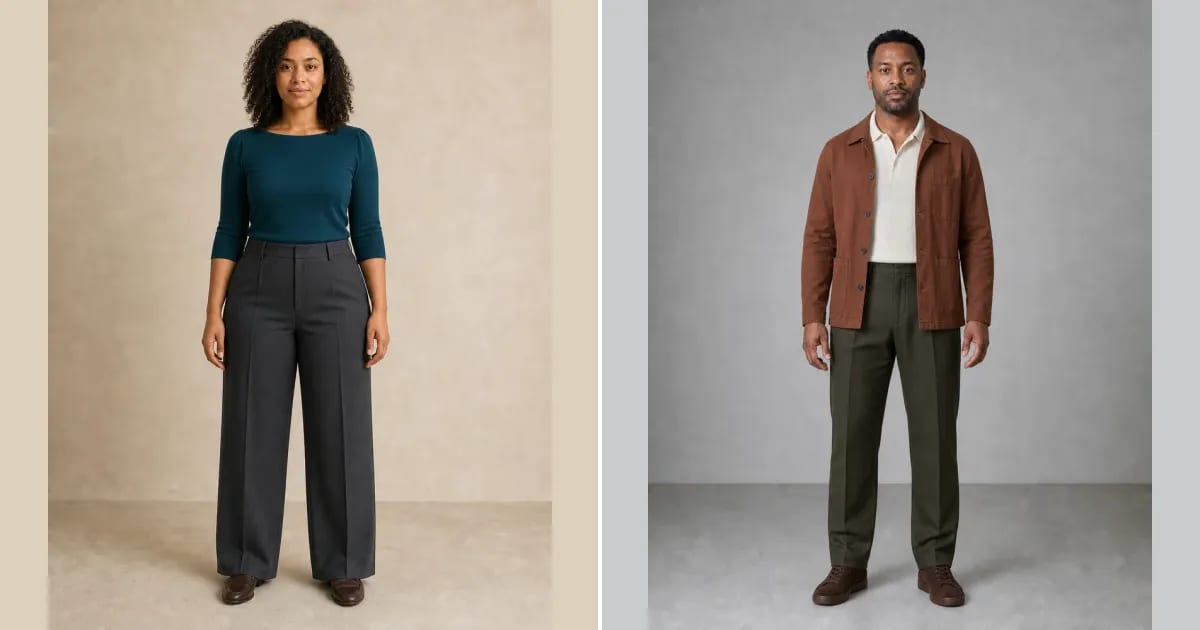
If you are asking ‘what clothes suit my body shape?’, start with proportions rather than restrictive fashion rules. Compare your shoulders, waist, and hips; decide whether you want to balance, define, lengthen, soften, or emphasize them; then preview several outfit silhouettes on your own photo.
Body-shape labels are only shortcuts. You may sit between categories, and the outfit you prefer may deliberately break traditional advice. Comfort, personal style, dress code, fabric, and real garment fit matter as much as shape.
How to estimate your body shape
Use a level, front-facing full-body photo in simple fitted clothing. Look at the relationship between shoulder and hip width, then notice how clearly the waist changes direction between them. A close wide-angle selfie or angled pose can distort these proportions.
- Hourglass or defined waist: shoulders and hips appear similar, with a visibly narrower waist.
- Pear or triangle: hips appear wider than shoulders.
- Inverted triangle or athletic: shoulders or upper torso appear wider than hips.
- Rectangle, straight, or column: shoulders, waist, and hips form a relatively straight outline.
- Apple, round, or oval: fullness is more noticeable through the middle, with less waist definition.
Many bodies combine features from two descriptions. Use the nearest categories to find outfit ideas, not to force yourself into an exact label.
Best clothes for each body-shape starting point
For hourglass or defined-waist proportions, try wrap tops, shaped jackets, belted dresses, fitted knits, and high-rise trousers when you want to follow the natural outline. If you prefer a relaxed silhouette, straight blazers and column dresses can work equally well.
For pear or triangle proportions, wider necklines, shoulder detail, brighter tops, straight trousers, wide-leg trousers, and A-line skirts can create more visual balance. To emphasize the lower body instead, test color, texture, pockets, or a stronger trouser shape.
For inverted-triangle or broad-shoulder proportions, compare open necklines, softer shoulder construction, clean vertical layers, pleated trousers, bootcut jeans, or fuller skirts. A structured blazer can also intentionally celebrate an athletic upper body.
For rectangle body shapes, wrap construction, cropped jackets, belts, pleats, and shaped seams can introduce definition. Long coats, matching separates, straight trousers, shift dresses, and overshirts continue a clean column line instead.
For apple, round, or fuller-midsection proportions, useful options include open collars, single-breasted layers, tops that skim, stable waistbands, and clean vertical seams. Waist emphasis is still optional: try a wrap or soft belt wherever it feels comfortable.
Look beyond the body-type label
Necklines control horizontal and vertical emphasis. Jacket shoulders, button position, and hem length change the torso outline. Trouser rise sets the apparent waist, while pleats, taper, and hem width affect the lower silhouette. Structured denim and tailoring hold a clearer shape; jersey, silk, and fine knits create more drape.
These principles work for women's and men's body shapes. A collar, cropped layer, long overshirt, wide trouser, fitted knit, wrap top, or structured coat can always be judged by the same questions: where does it add width, where does it create a line, and do you like the result?
Original outfit before-and-after examples
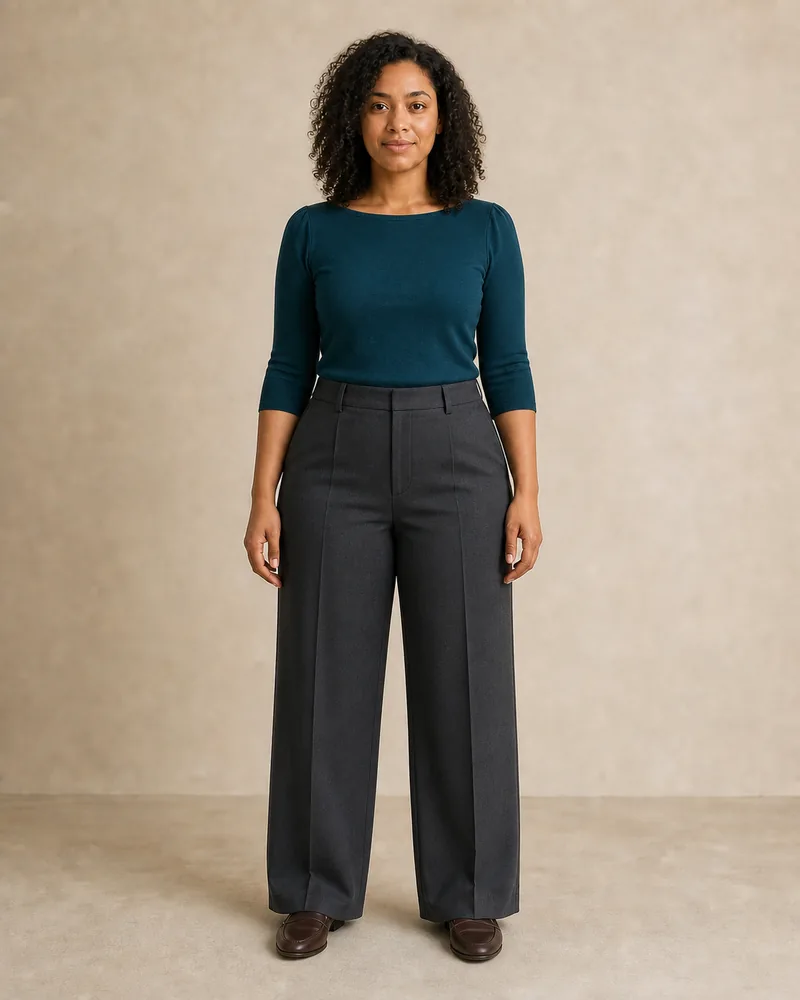
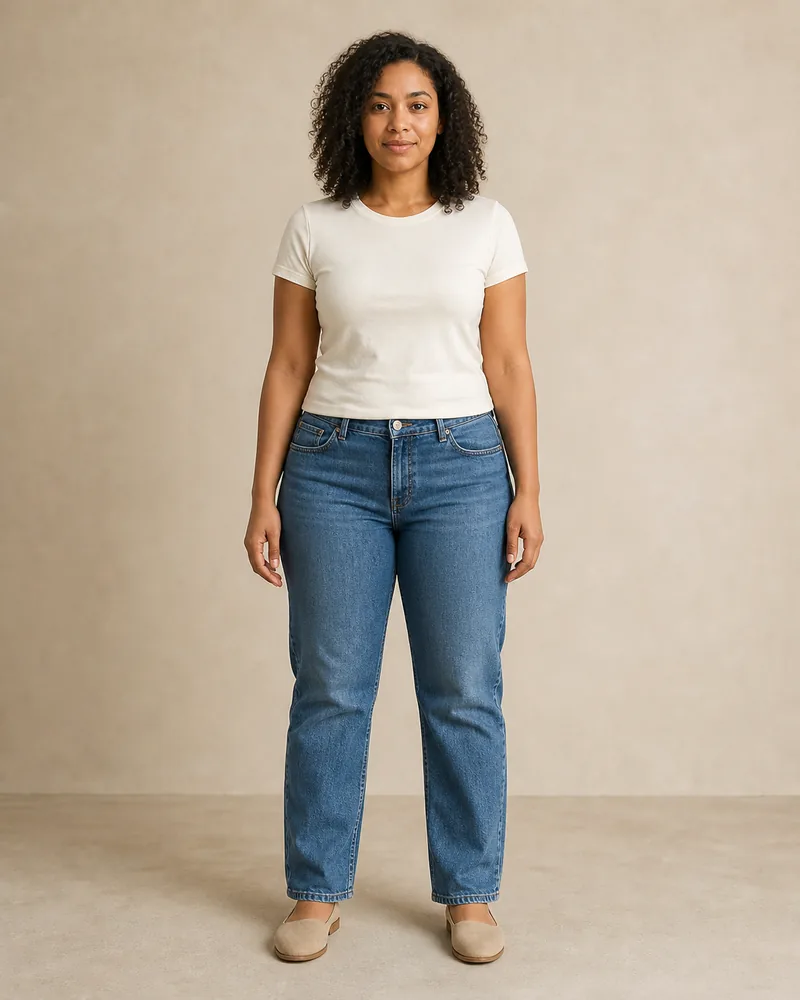
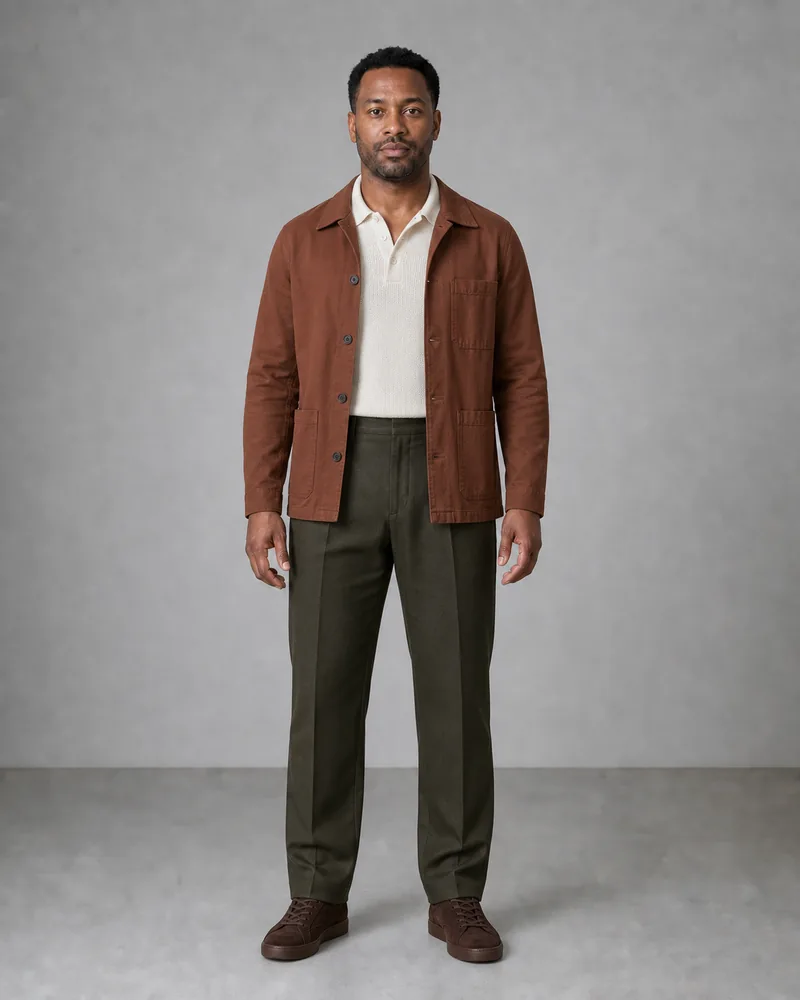
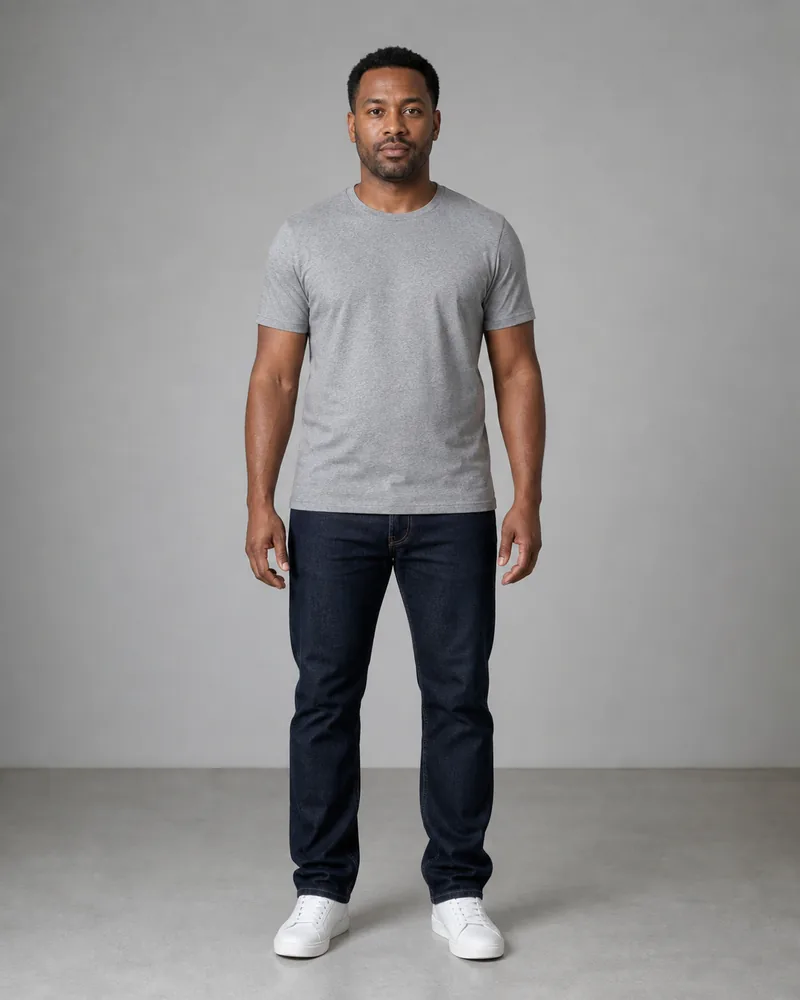
These original examples keep each model's identity, pose, camera angle, and natural body proportions consistent. Only the clothes change, showing how styling can alter the outline without suggesting that the person's body needs to change.
The women's comparison changes the neckline, shoulder detail, waist placement, and trouser width. The men's comparison introduces an open jacket, higher trouser waist, and cleaner vertical layering. Drag each divider and compare the clothing lines—not the bodies.
 BeforeAfter
Women's outfit · Teal top and wide-leg tailoring
 BeforeAfter
Men's outfit · Layered smart-casual tailoring
How to find what outfit suits you with AI
InFashi does not automatically diagnose your body shape. It lets you upload a photo and virtually try on clothes so you can compare specific outfit ideas on your own image.
- Use one clear, front-facing full-body photo in even light.
- Test three different silhouettes, such as straight, waist-defined, and layered or wide-leg.
- Generate every option from the same photo so the pose and camera remain consistent.
- Check that your face, shoulders, waist, hips, and height relationship remain natural.
- Compare neckline, shoulder line, waist placement, jacket hem, trouser fall, and color focus.
Virtual try-on is a style preview, not a fitting room
AI clothes try-on cannot confirm garment size, measurements, stretch, fabric weight, comfort, opacity, seam placement, or movement. Generated images can also alter the person. Discard a result if it changes your natural proportions, then combine the useful visual preview with product specifications, reviews, and return terms.
The best answer to ‘what clothes suit me?’ is a repeatable outfit formula you have tested. Record the neckline, jacket length, waist position, trouser rise, fabric structure, and color contrast you prefer. Use AI to explore the look, then verify the real fit before buying.
Frequently Asked Questions
- How do I know what clothes suit my body shape?
- Compare your shoulder, waist, and hip proportions, then decide whether you want balance, definition, length, softness, or emphasis. Test several different silhouettes on the same photo instead of treating one body-shape rule as a verdict.
- Can AI identify my exact body shape?
- InFashi does not diagnose or automatically label body shape. Estimate your proportions with a front-facing photo or measurements, then use AI try-on to compare outfits while checking that each result preserves your natural body.
- What clothes often suit a pear or triangle body shape?
- Boat necks, structured shoulders, brighter tops, defined waists, and straight or wide-leg trousers are useful starting points when the hips are wider than the shoulders. You can also emphasize the lower body if that better matches your style.
- Do body-shape clothing principles apply to men?
- Yes. Shoulder width, torso length, jacket structure, waist placement, trouser rise, and drape affect outfits across genders. The category names may differ, but the comparison method is the same.
- Does virtual try-on show the real size and fit?
- No. AI can preview color and silhouette, but it cannot verify measurements, size, stretch, fabric feel, construction, or comfort. Check the retailer's size chart, product details, and return policy before buying.
Try it on InFashi
Upload a photo in your browser, or download the Android app and preview your look on your phone.