What Should I Wear to Work? Compare Office Outfits With AI
Find practical work outfit ideas for business professional, business casual, and smart-casual offices, then compare the looks on your photo with AI.
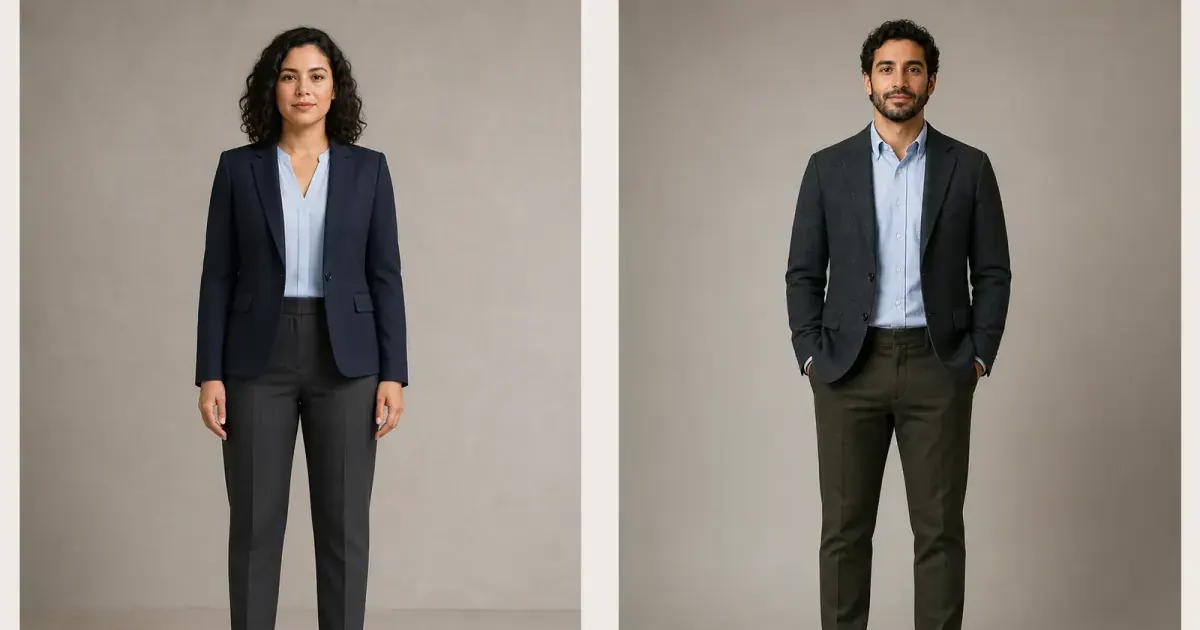
If you are asking, “What should I wear to work?”, the best answer starts with context rather than a universal outfit. A law office, design studio, hospital, warehouse, school, restaurant, and remote technology team can have completely different expectations. Your role, meetings, safety requirements, local climate, commute, and company culture all matter.
Once you understand those boundaries, an AI work outfit try-on can help you compare office outfit ideas on your own photo. It is useful for testing a blazer, different trouser shape, new color, or more formal version of an outfit before buying. It should support your judgment, not replace the employer's policy or a physical fitting.
Identify your workplace dress code first
- Business professional usually favors structured suits, tailored separates, restrained colors, polished shirts or blouses, and formal shoes.
- Business casual commonly combines polished separates such as trousers, chinos, skirts, shirts, blouses, knits, polos, cardigans, and optional blazers.
- Smart casual allows more relaxed fabrics and styling while keeping the complete outfit intentional, neat, and suitable for colleagues or clients.
- Uniformed, customer-facing, laboratory, kitchen, construction, and healthcare roles may have specific safety, hygiene, branding, or footwear rules.
- Remote and hybrid work may be visually flexible, but video meetings, office days, and client calls can still require different levels of polish.
Read the official policy and observe established norms instead of relying only on a label. “Business casual” can mean a blazer and tailored trousers in one organization but clean jeans and a knit in another. When uncertain, ask your manager or human-resources team, especially before an interview, presentation, site visit, or formal client meeting.
Original women's and men's work outfit examples
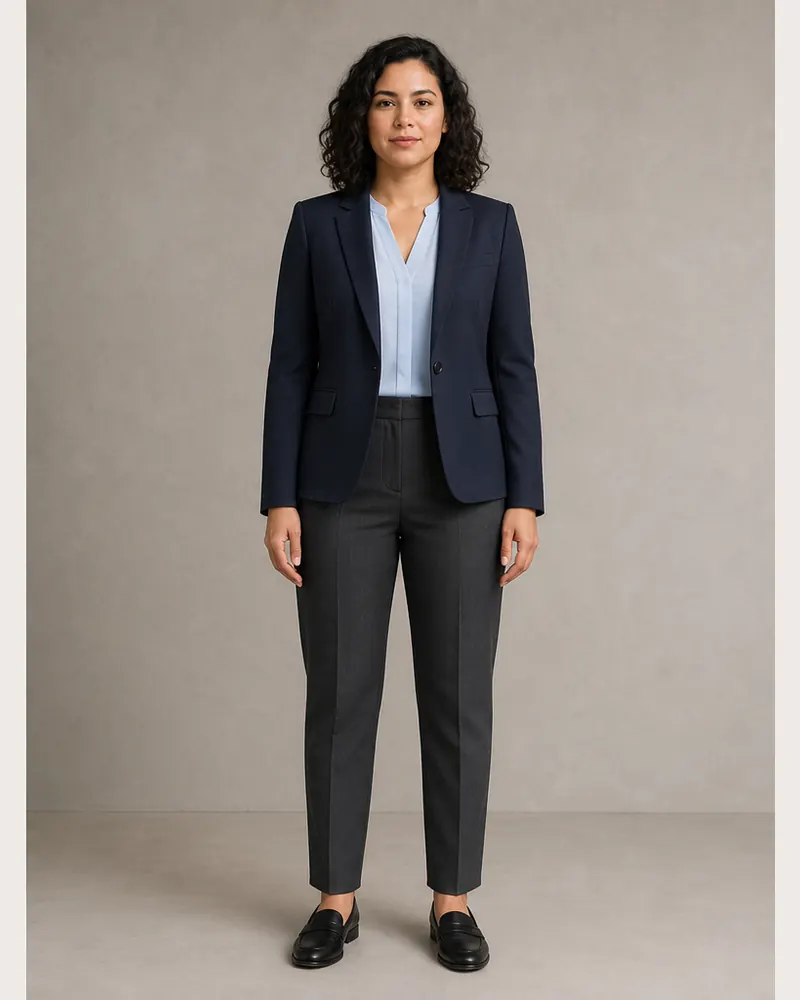
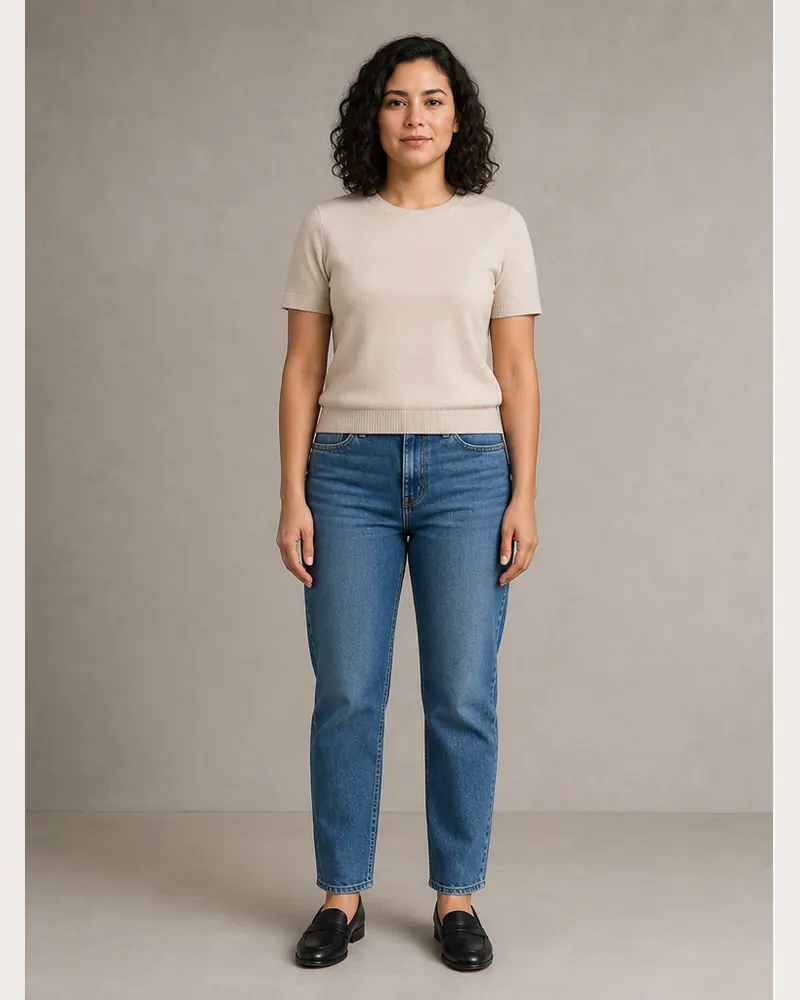
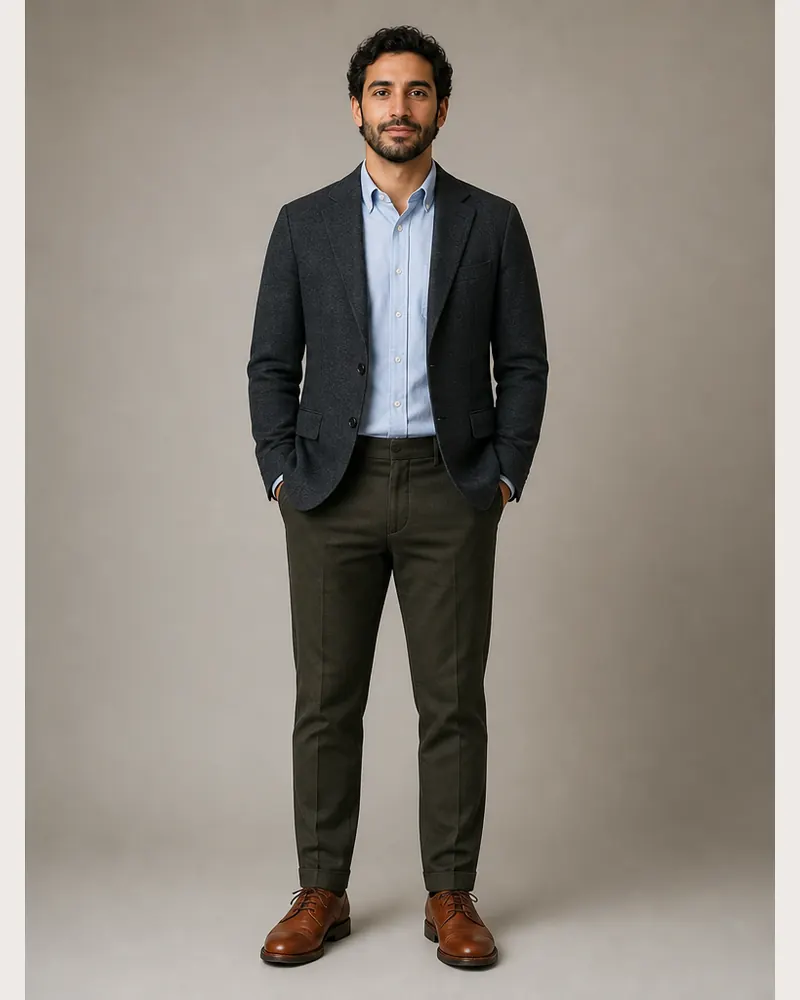
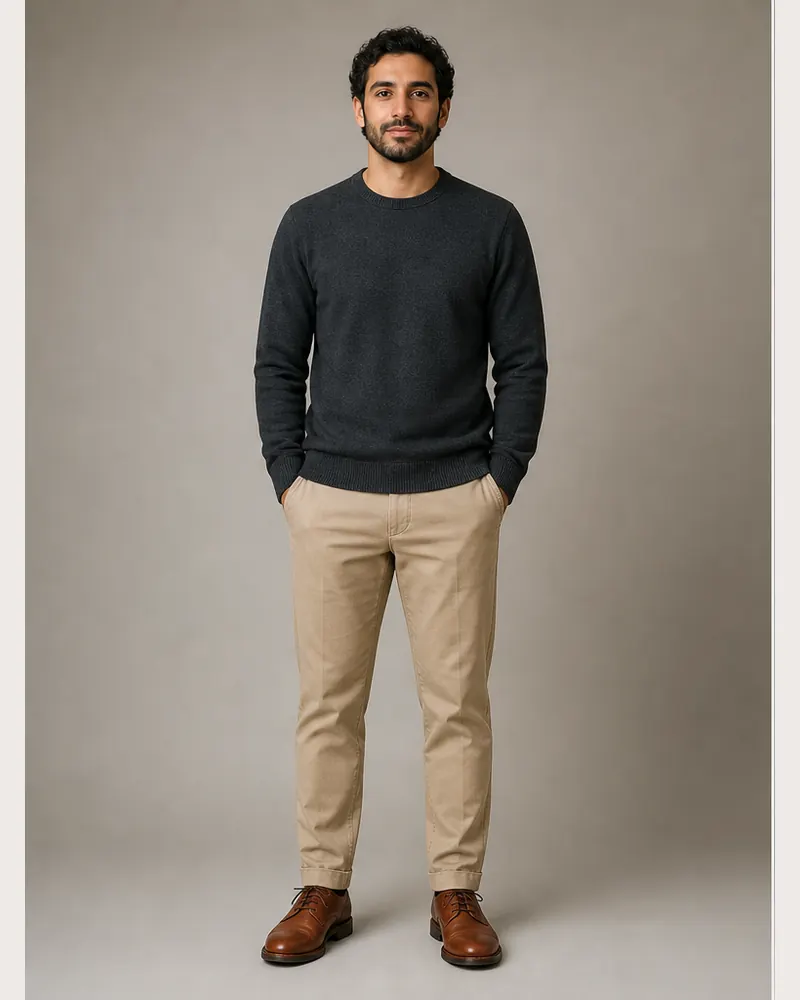
These original examples use fictional models created for this guide. Within each pair, the face, hair, body proportions, stance, shoes, lighting, camera, and background stay consistent while the clothing changes. Drag the divider to judge the outfit instead of comparing two different photographs.
The women's example previews a navy blazer, pale-blue blouse, and charcoal trousers. The men's example previews a charcoal blazer, Oxford shirt, and dark-olive tailored trousers for a smart-casual office.
 BeforeAfter
Women's work outfit · Navy blazer office outfit
 BeforeAfter
Men's work outfit · Smart-casual blazer outfit
Work outfit ideas for women
Professional outfit ideas for women can include a suit, blazer with trousers, blouse with a midi skirt, knit with tailored trousers, shirt dress, or polished jumpsuit where appropriate. Compare shoulder structure, neckline, sleeve length, waist placement, hem, and shoe formality. A neutral foundation can be repeated with different tops, layers, and accessories without making every workday outfit identical.
Work outfit ideas for men
Professional outfit ideas for men range from a complete suit and tie to a blazer with tailored trousers, an Oxford shirt with chinos, or a fine-gauge knit layered over a collared shirt. Compare jacket structure, collar, trouser rise and width, belt, socks, and shoes as one look. For a less formal team, a clean polo or knit may work better than automatically adding a suit.
How to compare office outfits with AI
- Upload a sharp, evenly lit, front-facing photo that shows your complete body and shoes.
- Choose a work outfit from the collection or upload a clean reference image showing the full garment or coordinated look.
- Generate one option at a time and confirm that your face, body proportions, pose, hands, and background remain believable.
- Reuse the same personal photo to compare business professional, business casual, or smart-casual alternatives fairly.
- Save a shortlist, then verify the real garments' measurements, material, care, price, availability, and return policy.
For a useful comparison, change one major variable at a time. Test navy against charcoal, a blazer against a cardigan, straight trousers against wide-leg trousers, or a collared shirt against a knit. If every garment, shoe, accessory, pose, and background changes together, it becomes difficult to understand why one result feels stronger.
Check practicality, not only appearance
A work outfit must function through commuting, sitting, reaching, temperature changes, and possibly long hours on your feet. Consider pockets, layers, wrinkle resistance, cleaning, footwear comfort, and whether the outfit works with required protective equipment. For video calls, preview the neckline, collar, shoulder line, and colors that remain visible in a head-and-shoulders frame.
AI cannot feel fabric, test movement, detect transparency, or confirm shoulder, chest, bust, waist, hip, sleeve, inseam, and garment-length measurements. It may also simplify prints, buttons, seams, and logos. Reject results that alter your identity or body, merge hands into clothing, or invent important construction details.
Create a small workwear wardrobe you can repeat
Instead of shopping for isolated outfits, identify a few compatible pieces: two bottoms, several tops, one or two layers, and shoes that cover your usual level of formality. Preview combinations on the same photo and note which colors and proportions work together. This produces more practical work outfit ideas and can reduce purchases that match only one item.
Open InFashi from any Try button on this page to compare work outfits on your photo. You can also download the Android app from the article's action panel and keep testing saved outfit references on your phone. Before buying, return to the retailer for accurate sizing, product details, delivery information, and return terms.
Frequently Asked Questions
- What should I wear to work?
- Begin with your employer's written dress code and the level of formality used by your team. Choose clean, comfortable clothes suitable for your duties, climate, commute, and meetings, then adjust color and style to express your personality within those boundaries.
- What is a good business casual outfit?
- Common starting points include a shirt, blouse, knit, or polo with tailored trousers, chinos, or an appropriate skirt. A blazer, cardigan, loafers, flats, or other polished shoes can raise the formality, but individual workplace rules take priority.
- Can I try on office clothes online using my photo?
- Yes. Upload a clear photo to InFashi and choose or upload a workwear reference. Use the same source photo to compare several office outfits, and keep only results that preserve your identity and natural body proportions.
- Can AI tell whether a work outfit fits correctly?
- No. AI can help compare visible styling, silhouette, color, and formality, but it cannot confirm measurements, comfort, movement, fabric quality, transparency, or compliance with your employer's policy.
- How many work outfits should I compare?
- Start with three: one reliable outfit close to your current style, one slightly more formal option, and one alternative color or silhouette. Comparing a focused shortlist on the same photo is more useful than generating many unrelated looks.
Try it on InFashi
Upload a photo in your browser, or download the Android app and preview your look on your phone.