Bob Haircuts: 10 Bob Styles to Preview Before Your Haircut
Compare 10 bob haircut ideas—from blunt and French bobs to curly bobs and lobs—and learn what to discuss with your stylist after an AI preview.
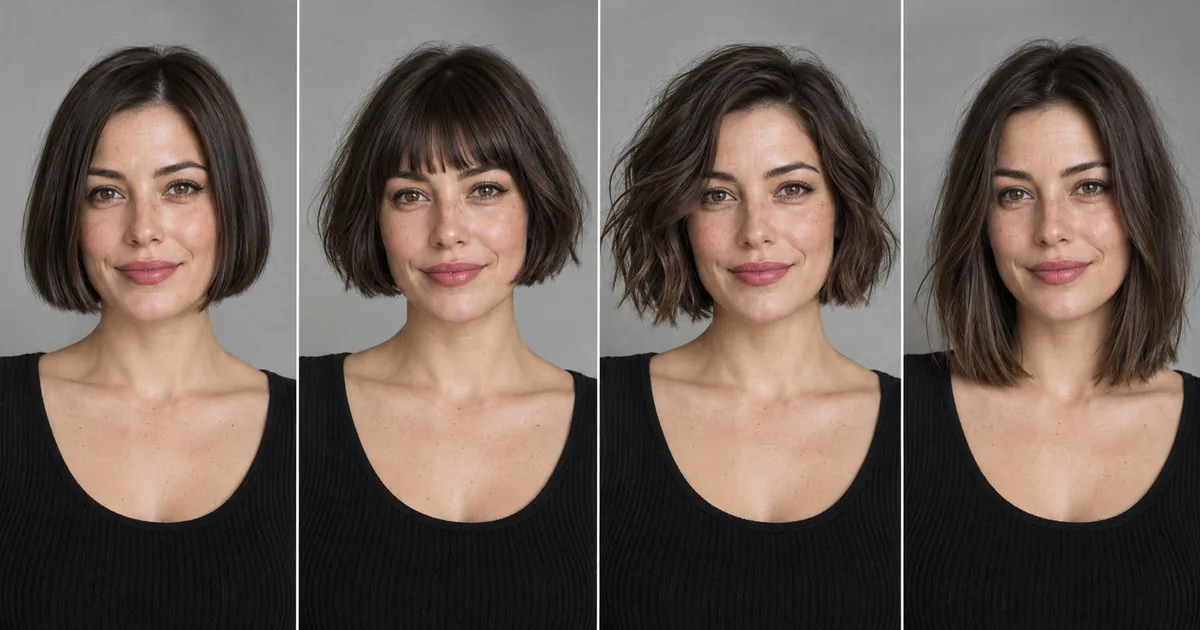
Bob haircuts range from sharp jaw-length lines to textured shoulder-skimming shapes. Two styles can both be called a bob while requiring different density, layering, fringe maintenance, and salon schedules. Instead of asking only whether a bob suits you, compare the specific length and structure you are considering.
An AI hairstyle preview can place several bob ideas around your face before the appointment. Keep the same selfie so you can judge the outline, fringe, visible neck, and volume without a different model influencing the comparison. Then ask a stylist how to adapt the reference to your real texture and growth pattern.
How to preview a bob haircut
- Use a front-facing photo with even light and your hairline, jaw, neck, and shoulders visible.
- Preview several endpoints: cheek, jaw, below the chin, shoulder, and collarbone.
- Keep hair color and texture consistent when the purpose is to compare length.
- Check both the overall outline and details around the ears, fringe, and ends.
- Save two realistic references and ask your stylist about density, shrinkage, and upkeep.
Four controlled bob comparisons
The original image above holds one fictional model, expression, top, camera angle, and gray background constant. The blunt bob emphasizes a clean perimeter, the French bob adds a soft fringe, the textured bob creates movement, and the lob drops the ends toward the collarbone. The comparison shows why 'a bob' is not one single look.
10 bob styles to consider
- Blunt bob: a clean, mostly one-length perimeter that makes the ends look deliberate.
- French bob: a shorter cheek-to-jaw shape, often paired with a soft or full fringe.
- Textured bob: visible movement and separated ends rather than a perfectly solid line.
- Layered bob: layers remove weight or add shape, depending on placement and density.
- A-line bob: shorter at the back and gradually longer toward the front.
- Stacked bob: graduated layers build volume toward the back of the head.
- Asymmetrical bob: one side or front section is intentionally longer than the other.
- Curly bob: the shape is planned around curl pattern, shrinkage, and volume distribution.
- Bob with bangs: a bob combined with blunt, curtain, wispy, or side-swept fringe.
- Long bob or lob: a shoulder-to-collarbone version with more tying and styling flexibility.
Choose the endpoint before the styling finish
A glossy salon wave can make almost any reference attractive, but the cut must also work without that finish. First decide where the perimeter should fall and whether you want a solid or layered outline. Then discuss straight, wavy, curly, air-dried, or heat-styled versions. Previewing one cut with several unrealistic textures can hide the decision you actually need to make.
Use face shape as a comparison tool, not a restriction
A jaw-length edge, cheek-level volume, fringe, and an off-center part can each change how a bob frames the face. There is no face shape that is automatically excluded from a bob. Preview the details you are considering on your own face, then choose the version that matches your taste and works with your hair rather than following a rigid rule.
Glasses and everyday parting also affect the frame. If you normally wear glasses, use a photo with them visible for at least one comparison. If you switch between a middle and side part, show your stylist both references because the balance and fringe behavior may change.
What AI cannot tell you about a bob
AI cannot feel density, damaged ends, cowlicks, scalp growth direction, or curl elasticity. It may create impossible volume, perfectly symmetrical ends, or a fringe that ignores your hairline. Shorter cuts can expose these differences quickly, so ask how the shape will sit after washing, in humidity, and several weeks after the appointment.
Questions to take to the salon
Ask whether your chosen endpoint will flip at the shoulders, how much layering your density supports, whether the style can be tied back, how frequently it needs trimming, and what daily styling is realistic. For curly hair, discuss dry length and shrinkage. For bangs, include growth direction and how often the fringe needs maintenance.
Use any Try button to open InFashi's hairstyle uploader, or continue in the Android app through the action panel. Compare several bob shapes, keep the most believable two, and let your stylist translate the visual references into a cut your real hair can maintain.
Frequently Asked Questions
- What is the difference between a bob and a lob?
- A bob generally finishes between the jaw and shoulders, while a lob—or long bob—usually sits around the shoulders or collarbone. Exact naming varies, so show your stylist the desired endpoint.
- Which bob haircut is easiest to maintain?
- A longer, softly layered bob may grow out more gradually than a very precise blunt or stacked cut. Daily maintenance still depends on natural texture, density, styling preference, and humidity.
- Can curly hair be cut into a bob?
- Yes, but curl pattern, density, shrinkage, and cutting method affect the final length and shape. Consult a stylist experienced with your texture and discuss whether the reference is shown wet, stretched, or naturally dry.
- Can AI show exactly how a bob will look on me?
- No. It can help compare visual outlines, lengths, and fringe ideas, but it cannot predict shrinkage, growth direction, density, or the amount of styling needed.
Try it on InFashi
Upload a photo in your browser, or download the Android app and preview your look on your phone.