Short, Medium or Long Hair: Which Hair Length Suits Me?
Compare short, medium, and long hair on your photo, then choose a practical length based on texture, density, maintenance, and styling goals.
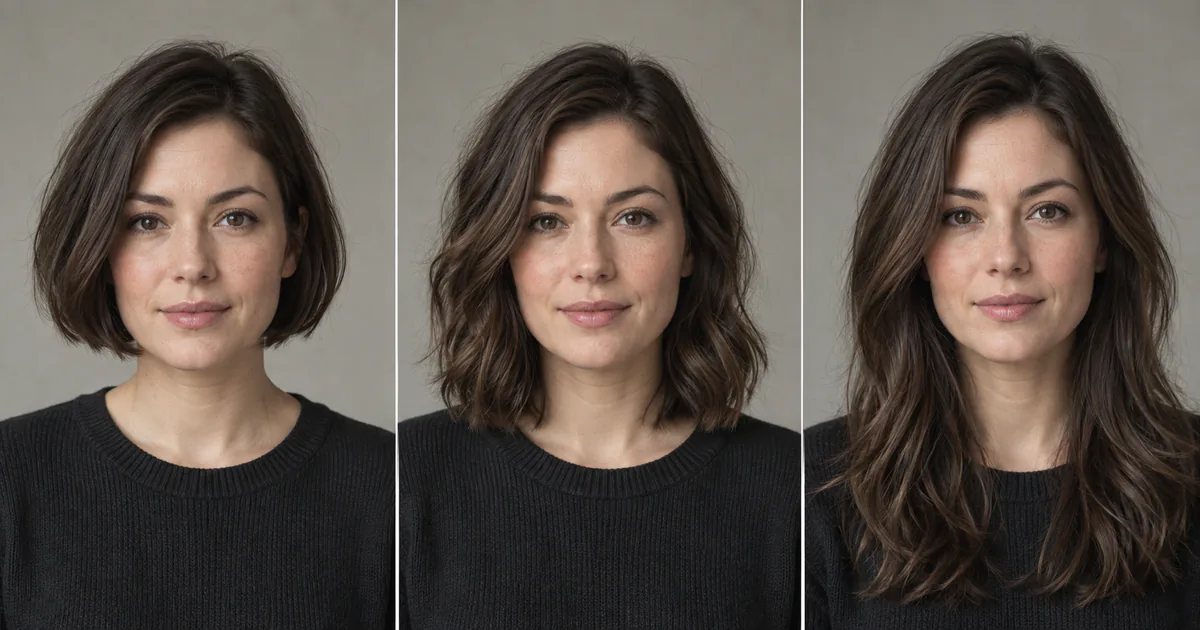
Choosing between short, medium, and long hair is less about finding one universally flattering length and more about finding a shape that works with your face, real hair, routine, and preferred style. A hairstyle can look balanced in a photograph yet require more heat styling, trims, or daily effort than you want.
An AI hair-length preview helps answer the visual question first. By keeping the same selfie and changing only the hairstyle, you can compare where the ends sit, how much hair surrounds the face, and whether added length or a shorter outline changes the balance you like. Treat the result as a conversation starter for your stylist, not a haircut guarantee.
How to compare hair lengths on your photo
- Upload a sharp, front-facing photo in even light with your full hairline, jaw, and shoulders visible.
- Create one short, one medium, and one long version while keeping the same photo, color, and general texture.
- Compare the position of the ends against your cheekbones, jaw, neck, shoulders, and upper body.
- Reject results that change your face, head size, hairline, or natural proportions.
- Save the most believable two options and discuss feasibility, maintenance, and styling with a stylist.
What the original comparison reveals
The comparison above keeps one fictional model, expression, clothing, crop, and background consistent. The chin-length bob creates a compact outline and places attention around the jaw. The shoulder-length version adds movement near the collarbone, while the long layered version creates more vertical flow. Because the surrounding variables stay stable, the effect of length is easier to judge.
Short hair: shape, exposure, and regular trims
Short hair exposes more of the neck, jaw, ears, and glasses. Bobs and crops can create a strong, deliberate silhouette, but precision cuts often show growth quickly. Ask how often the shape needs trimming and whether your natural wave, curl, cowlicks, or hairline will change the result. Preview several short shapes instead of judging the entire category from one bob.
Medium hair: flexibility without maximum length
Medium-length hair usually sits from the shoulders to the upper chest. It can support ponytails, waves, layers, and many fringe styles while feeling lighter than long hair. Placement matters: ends that land exactly at the shoulders may flip outward, and heavy layers can remove more density than expected. Compare a blunt lob, soft layers, and a textured shoulder cut before choosing.
Long hair: movement, weight, and care
Long hair offers room for braids, updos, and long layers, but added weight can stretch waves and reduce volume near the roots. Consider drying time, detangling, heat use, and the condition of the ends. If the preview looks best only with dense, polished waves, ask whether that finish matches your natural hair and realistic styling routine.
Hair texture and density matter more than a simple face-shape rule
Straight, wavy, curly, and coily hair do not fall to the same visible length, and curls may shorten considerably when dry. Fine hair may appear fuller with a cleaner perimeter; dense hair may need internal shaping to avoid unwanted width. A stylist can examine growth direction, elasticity, condition, and density in a way an image cannot.
Choose a length that fits your routine
Think about an ordinary week rather than the day of a salon blowout. Short precision cuts may need regular reshaping; medium hair may offer more tying options; long hair can demand additional washing, drying, and detangling time. If you exercise frequently, cover your hair, travel often, or need a quick work style, include those needs in the decision.
Also decide how much change you are comfortable making at once. Moving from very long hair to a chin bob is visually dramatic and takes time to reverse. A collarbone cut can provide a meaningful change while preserving more styling flexibility. There is no penalty for testing an intermediate length first.
Take a practical shortlist to your stylist
Bring two believable previews rather than one perfect-looking render. Explain which outline you prefer, how much time you spend styling, whether you wear your hair up, and how often you can return for trims. Use any Try button to open InFashi's hairstyle tool, or continue in the Android app from the action panel, then let the consultation turn the visual idea into a workable cut.
Frequently Asked Questions
- How can I tell which hair length suits me?
- Compare several lengths on the same clear photo, then consider your hair texture, density, growth pattern, styling routine, and maintenance budget. A visual preview helps with proportion, but a stylist should confirm what your real hair can support.
- Does face shape decide whether I should have short or long hair?
- No. Face shape can guide where volume, fringe, and ends sit, but it is not a rule. Texture, density, lifestyle, and personal preference are equally important.
- Is medium-length hair easier to maintain?
- It can offer styling flexibility without the weight of very long hair, but upkeep depends on the cut. A precise lob may need frequent trims, while soft layers can grow out more gradually.
- Can AI show exactly how my haircut will look?
- No. AI creates a visual planning preview. It cannot measure density, predict curl shrinkage, feel damaged areas, or show how your hair behaves after washing and styling.
Try it on InFashi
Upload a photo in your browser, or download the Android app and preview your look on your phone.